Showing posts with label soup. Show all posts

Saturday, December 24, 2016

Wappani

Your first clue for finding out what wappani is.
Truly, I am the MS Paint artist of the age!


Type  "wappani" into Google and you will find all manner of highly informative information -- on a native American tribe called the Wappinger. (They lived from Manhattan through Poughkeepsie, by the way. They merged with other native peoples after they and the Dutch spent some time beating the tar out of each other.)

But wappani -- no matter what your search engine may try to tell you -- has nothing to do with North American peoples, (though when you know what it is, you can't help but think it ought to be).

It's actually a Japanese dish, and it's spelled like this わっぱ煮. You'll find it's associated with the island of Awashima (kanji thusly: 粟島), part of Niigata Prefecture (aka Niigata ken or 新潟県).

And now, ¡te presento una mapa con la isla de Awashima! (Yes, I know this isn't Things on Latin America/Spain. I just don't get a lot of opportunities to show off my beginner's Spanish. Can't fault me that much, can you? ;) )


So, our geographical context is in place. Time to tell you what wappani is. It is, more or less, this:

First, take a special flat-bottomed bowl made of cedar (aka the wappa, aka わっぱ . You have no idea how much I want to think up a wappa/Whopper joke right now). Put your soup ingredients in it, including things like miso, onion and cooked fish.

Next, locate a few (and this is important) heat-resistant rocks (we're talking basalt (aka genbugan/玄武岩) here. Don't nobody wanna dodge kitchen shrapnel, 's all I'm sayin'.) Heat them in a well made fire of some kind until they're so hot that they scare you. Pour hot water into your bowl.

Take up your pair of fire resistant tongs, pick up one of your hot rocks, dip it in a conveniently placed bowl of water, and insert it into your wappa. If you've done it right, the water will instantly begin (and continue for a short time) to boil extremely well -- the 煮 part of wappani.

When it stops boiling as much, repeat the rock dipping and inserting process, until you are satisfied. (I actually don't know why the people in the videos I looked at put new hot rocks in the wappa. The soup looked pretty heated up to me with just the first rock. Trade secrets, perhaps, or unobservant blogger.)

Voila, wappani! Basically a ancient/tribal/survivalist version of making your own phyllo/puff pastry/lutefisk. In a way needlessly complicated, but interesting, kind of impressive and possibly worth doing one time, if you're in the mood for it.

Here's one of the videos I looked at:


A variation on the heating process involves putting the rock in before the water, and adding in more than one rock, as you can see in this video:


I'm sure the ancient Awashima inhabitants also had their fine wire strainers to get the foam off the top of the bowls. ;)

And there's more. The video below (dated May 2010) shows what looks like some kind of first annual festival. Be warned: lots of Japanese folksy (and even at one point jazz/bluesy) music  and lots of people being silly for the camera -- dancing, singing, saying that the wappani is delicious ("umai!" and "uma'!"), and having exaggerated reactions of bliss while eating it. (Of course, if wappani takes a long time to make, they may have just been really hungry.) Those feeling dignified and/or find their eyes (and soul) twitching at the sound of goofy or twangy music, this may be a little hard to watch.

 Might be fun to go to though. ;)


References:

From Wappinger to wappani.

The Free Dictionary: Wappinger

NHK: みちしる:粟島のわっぱ煮漁師たちの豪快な郷土料理 <-- Had to guess out a way to put the title together on this one, just an FYI to the bibliographers out there.

粟島浦村: 粟島食の特産品


(Only three this time, amazing!) Also, the middle reference has an interesting video that I would have liked to embed here, but alas.)

Saturday, October 17, 2015

Mugicha (Barley Tea)


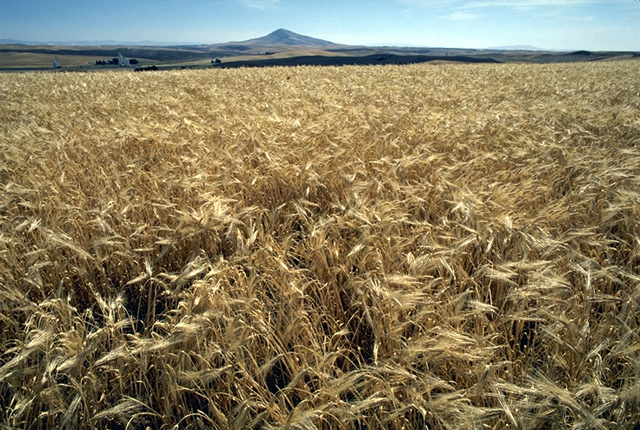
File:Barley.jpg
A glowing, fluffy field of barley with some pretty, swoopy mountains in back.


Before delving more into Japanese culture, I didn't really even think about barley, except for whenever I came across it in the Redwall books, where one of the uses was to make a drink with it. Someone I know tends to associated barley with beef and barley soup.

File:Barley (1).jpg
So these is barley plants then?
Then came the discovery of and research for a post on mugicha (麦茶 as it's written in Japan), which many people outside Japan other than myself seem to have known about for years and years and years. To these people, mugicha is a (Korean, Japanese and Chinese) drink, as well as a coffee and alcohol substitute. In Italy, for example, it's used as an espresso substitute and they call it cafe d'orzo.

Not to mention it's a diet drink, though I don't know where exactly, believed to help get rid of unwanted fat for you. It's also a laxative, but I don't know how popular it is for that feature. But, I hear (at least some of you) ask, warily eying the last sentence, what is mugicha?

To give you an actual definition, mugicha is a (caffeine-free) drink that's made with toasted barley and water (which means it's a tisane). In Japan, it's a thing to drink it in the summer, and ice is perfectly alright to add to it. Why drink it in summer? Its supposed to refresh those bogged down with the heat of summer temperatures. However, it's also a thing in Japan to drink mugicha warmed up in the winter. Sweetened or unsweetened are both acceptable as well, though I'm not sure if that goes for both hot and cold mugicha or just the cold or what.


File:Barley.JPG
Sure looks like pearl barley to me.
As for the taste, let me start with an anecdote that is also blatant post linking: If, like me, you read American Fuji, you may remember the scene where Alex Thorn, one of the main protagonists, is offered some mugicha by his love interest (and other main protagonist), Gabriela Stanton. His reaction? He didn't like it, claiming it tasted like boiled cereal.

He was right -- it tastes like Kashi, the puffed-gain cereal as located in the health food section. And, from my imperfect memory, I think it did sort of have a coffee type roasty-ness too. How do I know this? I made some (for the first time ever) this July. Here's a picture of it:


Want to make your own? There's lots of recipes out there, with lovely pictures on how to make it using pearl barley -- one roasts it via a skillet, no oil or anything, then simmers the result in water. La Fuji Mama's recipe has pictures showing the stages of toasty-ness that the barley goes through while it's in the skillet, as well as other helpful pictures (clicky). ( It was this site I used to make my aforementioned mugicha). La Fuji Mama also says there are several differences between un-hulled barley and pearl barley mugicha -- un-hulled barley mugicha isn't as sweet as the kind made with pearl barley and doesn't exactly have the same flavor.

But while you can make mugicha at home, there are commercial boxes of *huge* bags of it (each bag makes a pitcher), where all one does is put a bag into cold water (that's right -- cold water, a plus in hot weather), and wait for whatever length of time is stated in the box's directions.  These bags use un-hulled roasted barley. If you don't want to spend any time at all making some, there's bottles of pre-brewed mugicha.

Now for a quick little health-scare PSA. There's acrylamide in mugicha (at least, the way the people studying mucha brewed it). This chemical may or may not cause cancer. Boo.

Oh, and one book said it's not barley that's used, it's wheat. And another said barley or rye. Type-o, or a deeper conspiracy? It might be a just type-o, as mugi can be used to mean, among other grains (rye, oats, barley), wheat -- though if you say it without explaining, people think you mean barley.


File:Vegetable beef barley soup.jpg
A pretty rendition of beef and barley soup. Just thought I'd put it here. Enjoy!


References:
Sheesh, this is a long list! (Maybe I should start doing inline citations)

"Keith Michell's Practically Macrobiotic Cookbook"; Keith Michell; 2000

La Fuji Mama: Homemade Mugicha—Japanese Roasted Barley Tea

"Japanese Women Don't Get Old or Fat"; Naomi Moriyama, William Doyle; 2005

"Pretty Good Number One: An American Family Eats Tokyo"; Matthew Amster-Burton; 2013

"A Cook's Journey to Japan: Fish Tales and Rice Paddies 100 Homestyle Recipes from Japanese Kitchens" Sarah Feldner; 2012

"Kyotofu: Uniquely Delicious Japanese Desserts"; Nicole Bermensolo; 2015

"Lonely Planet Japan"; Lonely Planet, Chris Rowthorn, Andrew Bender, Laura Crawford, Trent Holden, Craig McLachlan, Rebecca Milner, Kate Morgan, Benedict Walker, Wendy Yanagihara; 2013

"The Macrobiotic Way: The Complete Macrobiotic Lifestyle Book"; Michio Kushi; 2004

"Five Hundred Fun Facts About Japan"; DIANE Publishing Company, Dorothy Perkins; 1994

"The Sober Kitchen: Recipes and Advice for a Lifetime of Sobriety"; Liz Scott; 2003

"Japanese Food and Cooking"; Stuart Griffin; 2011

"A Dictionary of Japanese Food: Ingredients & Culture"; Richard Hosking; 2014

"Handbook of Bioenergy Crops: A Complete Reference to Species, Development and Applications"; Nasir El Bassam; 2010

"The new beauty: an East-West guide to the natural beauty of body and soul"; 1996

"Berlitz: Japan Pocket Guide"; Berlitz; 2013

"Edible Medicinal And Non-Medicinal Plants: Volume 5, Fruits"; T. K. Lim; 2013

"Teach Yourself Japanese"; Prem Motwani, Noriko Nasukawa, Noriko Nasukawa; 1998


"The Complete Book of Japanese Cooking"; Elisabeth Lambert Ortiz, Mitsuko Endo; 2014

"Chemistry and Safety of Acrylamide in Food"; Mendel Friedman, Don Mottram (editors); 2005