Showing posts with label American Fuji. Show all posts

Saturday, October 17, 2015

Mugicha (Barley Tea)


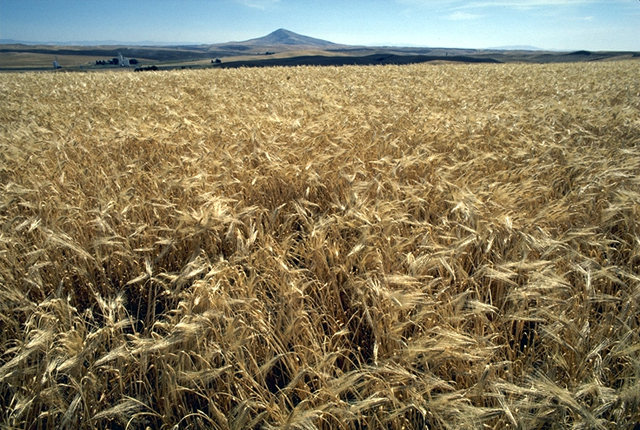
File:Barley.jpg
A glowing, fluffy field of barley with some pretty, swoopy mountains in back.


Before delving more into Japanese culture, I didn't really even think about barley, except for whenever I came across it in the Redwall books, where one of the uses was to make a drink with it. Someone I know tends to associated barley with beef and barley soup.

File:Barley (1).jpg
So these is barley plants then?
Then came the discovery of and research for a post on mugicha (麦茶 as it's written in Japan), which many people outside Japan other than myself seem to have known about for years and years and years. To these people, mugicha is a (Korean, Japanese and Chinese) drink, as well as a coffee and alcohol substitute. In Italy, for example, it's used as an espresso substitute and they call it cafe d'orzo.

Not to mention it's a diet drink, though I don't know where exactly, believed to help get rid of unwanted fat for you. It's also a laxative, but I don't know how popular it is for that feature. But, I hear (at least some of you) ask, warily eying the last sentence, what is mugicha?

To give you an actual definition, mugicha is a (caffeine-free) drink that's made with toasted barley and water (which means it's a tisane). In Japan, it's a thing to drink it in the summer, and ice is perfectly alright to add to it. Why drink it in summer? Its supposed to refresh those bogged down with the heat of summer temperatures. However, it's also a thing in Japan to drink mugicha warmed up in the winter. Sweetened or unsweetened are both acceptable as well, though I'm not sure if that goes for both hot and cold mugicha or just the cold or what.


File:Barley.JPG
Sure looks like pearl barley to me.
As for the taste, let me start with an anecdote that is also blatant post linking: If, like me, you read American Fuji, you may remember the scene where Alex Thorn, one of the main protagonists, is offered some mugicha by his love interest (and other main protagonist), Gabriela Stanton. His reaction? He didn't like it, claiming it tasted like boiled cereal.

He was right -- it tastes like Kashi, the puffed-gain cereal as located in the health food section. And, from my imperfect memory, I think it did sort of have a coffee type roasty-ness too. How do I know this? I made some (for the first time ever) this July. Here's a picture of it:


Want to make your own? There's lots of recipes out there, with lovely pictures on how to make it using pearl barley -- one roasts it via a skillet, no oil or anything, then simmers the result in water. La Fuji Mama's recipe has pictures showing the stages of toasty-ness that the barley goes through while it's in the skillet, as well as other helpful pictures (clicky). ( It was this site I used to make my aforementioned mugicha). La Fuji Mama also says there are several differences between un-hulled barley and pearl barley mugicha -- un-hulled barley mugicha isn't as sweet as the kind made with pearl barley and doesn't exactly have the same flavor.

But while you can make mugicha at home, there are commercial boxes of *huge* bags of it (each bag makes a pitcher), where all one does is put a bag into cold water (that's right -- cold water, a plus in hot weather), and wait for whatever length of time is stated in the box's directions.  These bags use un-hulled roasted barley. If you don't want to spend any time at all making some, there's bottles of pre-brewed mugicha.

Now for a quick little health-scare PSA. There's acrylamide in mugicha (at least, the way the people studying mucha brewed it). This chemical may or may not cause cancer. Boo.

Oh, and one book said it's not barley that's used, it's wheat. And another said barley or rye. Type-o, or a deeper conspiracy? It might be a just type-o, as mugi can be used to mean, among other grains (rye, oats, barley), wheat -- though if you say it without explaining, people think you mean barley.


File:Vegetable beef barley soup.jpg
A pretty rendition of beef and barley soup. Just thought I'd put it here. Enjoy!


References:
Sheesh, this is a long list! (Maybe I should start doing inline citations)

"Keith Michell's Practically Macrobiotic Cookbook"; Keith Michell; 2000

La Fuji Mama: Homemade Mugicha—Japanese Roasted Barley Tea

"Japanese Women Don't Get Old or Fat"; Naomi Moriyama, William Doyle; 2005

"Pretty Good Number One: An American Family Eats Tokyo"; Matthew Amster-Burton; 2013

"A Cook's Journey to Japan: Fish Tales and Rice Paddies 100 Homestyle Recipes from Japanese Kitchens" Sarah Feldner; 2012

"Kyotofu: Uniquely Delicious Japanese Desserts"; Nicole Bermensolo; 2015

"Lonely Planet Japan"; Lonely Planet, Chris Rowthorn, Andrew Bender, Laura Crawford, Trent Holden, Craig McLachlan, Rebecca Milner, Kate Morgan, Benedict Walker, Wendy Yanagihara; 2013

"The Macrobiotic Way: The Complete Macrobiotic Lifestyle Book"; Michio Kushi; 2004

"Five Hundred Fun Facts About Japan"; DIANE Publishing Company, Dorothy Perkins; 1994

"The Sober Kitchen: Recipes and Advice for a Lifetime of Sobriety"; Liz Scott; 2003

"Japanese Food and Cooking"; Stuart Griffin; 2011

"A Dictionary of Japanese Food: Ingredients & Culture"; Richard Hosking; 2014

"Handbook of Bioenergy Crops: A Complete Reference to Species, Development and Applications"; Nasir El Bassam; 2010

"The new beauty: an East-West guide to the natural beauty of body and soul"; 1996

"Berlitz: Japan Pocket Guide"; Berlitz; 2013

"Edible Medicinal And Non-Medicinal Plants: Volume 5, Fruits"; T. K. Lim; 2013

"Teach Yourself Japanese"; Prem Motwani, Noriko Nasukawa, Noriko Nasukawa; 1998


"The Complete Book of Japanese Cooking"; Elisabeth Lambert Ortiz, Mitsuko Endo; 2014

"Chemistry and Safety of Acrylamide in Food"; Mendel Friedman, Don Mottram (editors); 2005

Friday, August 14, 2015

Book Review: American Fuji

Mt. Fuji, courtesty the CIA World Factbook.


When I'm at a library, I sometimes do a search on Japan to see what comes up. Other than a lot of manga, which I'm not really into, there are some history books (though usually not as many as I'd like), culture books in the juvenile section and novels, but mostly ones from the fiction section -- that is, novels that aren't from the young adult or juvenile sections. I tend to have great reservation with novels for grown ups -- even greater, perhaps, than the reservation I have toward young adult books.  But I decided to try American Fuji anyway, and this post is my trying to review it.


P.S. Just so you know,  I read this with an overtired mind, got rather annoyed at it partway through (perhaps in part because I was overtired), and am overtired now, writing this. And, I looked at some spoilers on a review site before I was finished (and in doing so was partly misled for a time)...just a typical, opinionated blog post. :D


P.P. S. (By the way, this is light on spoilers, so you can read it with moderate safety! *salutes*) (Also, I did writing this post quite a while after reading the book).


Plot Overview
Published in 2001, and set in 1990 something, American Fuji's plot has two main problems/mysteries to be resolved. The first is the unexplained death of American psychologist Dr. Alex Thorn's son, Cody, from whom he was estranged.


The second one is actually two. Both involve an amazingly qualified college instructor, expatriate Gabriela (aka Gaby) Stanton (also American). Living, I think, in Shizuoka City (maybe?) , Gaby (can't help but wonder if her name's a pun)'s problems/mysteries are:


a.) she was fired from the Japanese university she was working at -- okay, okay, at which she was working. We have no idea why at first, and neither does she.


b.) Why is she living in Japan at all? She knows the answer, but no one else does.


Alex and Gaby end up meeting through Gaby's current workplace, a sort of funeral home with distinctly unusual funeral options, and they set off together (more or less) to find answers to their lives' most persistent questions. (Sorry, I couldn't resist). 


The Genre
But really, half of the time, the novel does have sort of a murder mystery aspect, if not exactly with a distinct noir or Agatha Christie-ness. There's digging through files, traveling to places and interviewing people, discussing clues, etc. However, that's only half of it. And I mean that in a kind of literal way. The other, fifty-ish percent of the time, it's a satire. Not to mention the fish out of water humor on Alex's part.

The Bad
Was it worth it? Let's start with the bad points. And yes, there are some bad points in this novel.  From the beginning of the story, the author regularly inserts completely unnecessary, very nasty, shall we say "adult", passages -- a general problem I've found in novels classed s "Fic"  -- except they also tend to be dull, too. (More on this in The Good section). These chunks of stupidity tend not to last long, but still. (Also at the introduction of Alex, there's a scene in which a mostly sedated fish is eaten alive. Alex throws up and excuses himself. Yeah... I guess that was a "creepy things to avoid in Japan" cultural moment.)


Another not so great point is that the serious side of the story seems perhaps a bit one dimensional, at least where characters other than Gaby and Alex are concerned. There were some bits I didn't quite follow, and possibly that was just me (see the introduction).

Another thing that later got me down a lot was that most characters, Japanese and non-Japanese alike, are not very nice. For instance, all the Japanese children are mindless brats to foreigners, and Gabriela's associates and neighbors (and one of her co-workers) are invasive and/or nasty and/or selfish and/or strict conformists. (The strict conformism is apparently later explained as being the culture of the area she was living in). There's also an exaggerated opinion of the "American" mindset -- which is discussed in a serious context as if it were totally valid.


And finally, at the very end, the wrap up/coming to terms for Dr. Thorn, though I had been skimming on account of being really over-tired, seemed weak.


All the same,  I feel lenient and wouldn't totally discount American Fuji. In fact, I kinda liked it -- though I did get terribly annoyed, with obsceneness and the exaggerated depiction of people, part way through reading it. But the novel also has some good points.


The Good
For instance, the style wasn't that bad. I did want to keep going out of genuine interest for a while, not just morbid curiosity and the odd, dogged sense of finishing what I start to read that I get sometimes with stupid novels (and later regret). So yeah.


The cultural information bits were interesting too -- some of it I recognized, from reading about Japan on the internet and probably other places, (stuff like Pocari Sweat, Otohime, alcohol from vending machines). And, for a time, I was able to laugh at the satirical half of it. And the descriptions of different places in Japan were also interesting, though I suppose there's always the possibility of artistic license when it comes to that.


And here's something I couldn't help but have an appreciation for: Gaby and Alex do not actually end up, ah, having a night together. They nearly do, but don't -- she wants to wait -- and Alex doesn't have a macho tantrum or get all deeply hurt. That is a rarity in grown up books, in my experience. Some of you might not mind such scenes, but by now you've probably guessed that, I do. So, in a way, another good point for American Fuji, in my assessment. Perhaps the author thought all the nastiness she put in made up for it. I dunno. Anways, let's move on to the conclusion.


Conclusion
All in all, the novel undeniably does have a muck problem, don't want to understate that, and it's use of styles were not as blended as I personally would like, and it's a bit flat, but if you're looking for a comedy/mystery that also is a sort of trip to Japan... you, and I say this tentatively, possibly might want to try it. Just remember you'll have to skip over some stupid stuff every so often, and you probably do not want get too involved in the serious side of it.


Oh, and there's undoubtedly all sorts of symbolism and metaphors concerning human interaction in American Fuji. But I'll leave that up to all y'all's (is that a word?) blog posts.


Ta!


References:
Only the one this time.
"American Fuji"; Sara Backer; 2001