Showing posts with label Japan. Show all posts

Monday, October 31, 2016

Shōbu, Hanashōbu, Ayame... or Something

Those of you who are up on Japanese flower/month seasonality know that this is waaaay out of sync. But hopefully you like it and don't feel too edutained. 


Observe this picture a moment.


Kinda pretty, isn't it?  I came across it in the Library of Congress's Flickr account (they've got a lot of old images there, you should check it out).

Its title is Horikiri no Hanashōbu or "Irises at Horikiri". It's -- and I have no idea why this is-- either number 56 or number 64 of the Utagawa Hiroshige's  One Hundred Views of Famous Places in Edo (Meisho Edo Hyakkei or 名所江戸百景).

(You might already know that Utagawa Hiroshige (1797 to 1858) was a famous woodblock artist. But if you didn't, now you do).

Strangely, I've looked at a couple different museums' copies of this print, and their color schemes tend to look different from the above... But that's a side trip of a side trip, when what I'm really trying to do is lead into today's topic: irises.

Though you don't hear about it (or at least I hadn't), irises were (and still are) a thing in Japan. There's stuff on them in centuries-old gardening manuals. And they were a popular (and therefore profitable) plant to grow there a while back. Not to mention the old gardens either partly or totally dedicated to irises.

For now, I'm going to focus on iris-related botany and traditions, and maybe I'll add in some more history as time goes on.


Names and Species
So let us ask ourselves, what makes the Japanese iris or hanashōbu  (花菖蒲)? Or should we say shōbu (菖蒲) instead? Or perhaps the name is ayame? ...'Scuse me a moment *breathes into paper bag for half a minute*.

Okay, I'll try to explain now.

When first trying to find a botanical definition for the "Japanese iris" (get ready for some Linnaeus-style names), I (big surprise) ran into different people saying different things. Looking again (it had been a while since I last worked on this post), I've discovered a list of irises plus their Japanese names on a personal page hosted by the University of Vermont. Here's a list of irises that I found there (the "I." is short for "Iris"):

I. sanguinea = ayame 
I. ensata = hanashōbu 
I. laevigata = kakitsubata 
I. japonica = shaga 
I. pseudacorus = ki shōbu

Of course this same list says that just plain shōbu means Acorus calamus, aka the sweet flag/calamus/sweet calamus... though a different place says an (old) name for calamus is ayame. Then there's  this book that says that Acorus calamus (variant asiaticus) is the shōbu, also known as ayame. Which various sites agree with when it comes to traditions that use irises.

Thought I'd put some iris pics
in. This one I think's supposed
to be I. pseudacorus. From
NYPL Digital Commons.
But wait, here's another explanation that goes like this: ayame/hana-ayame is an old-time word for iris, while shōbu  is a shortening of hanashōbu -- though you might see the latter referenced as sweet flag.

And then, rising out of the mist to join the unholy horde of maniacally disparate definitions, comes yet another one, more insidious than the last. Agreeing with the Vermont page, that same aforementioned book says hanashōbu applies to I. ensata, and also includes what it calls the I. ensata's "descendants". (I assume that means hybrids or crossbred species?) Oh, and ayame is also another (old) name for I. sanguinea, by the way. But wait, there's still more.

When looking up hanafuda in the online video world, I've seen a vlog and a Japanese language video on the koi-koi style that both say the name's ayame or shōbu. (Nargh......)

Like something the dinosaurs
would've walked by (and probably
stepped on), it's: the sweet flag.
The dotted oblong thing on the
left is the "flower". 
And then, there's this one book that says ayame and hanashōbu  are both words for I. ensata -- which it says in English is called the Japanese iris, Japanese water iris and Kaempfer's ris. (Double, no, triple nargh....)

Of course, my Japanese-English dictionary (published by Langenscheidt) simply said the name for iris was 'ayame', but I've grown not to trust it that much, so who knows what the truth is -- apparently, nobody does. At all. Probably depends on what your family/friends use.


One really does start to wonder just how set these definitions are...  *gives a jaded yet dispassionate glare into the middle distance*

Sigh....


Traditions
Ignoring the fact that the science of botany must be evidence that not all potentialities completely collapse when a decision is made, let's talk about some of the cultural stuff.

You'll find sites that say that the iris is associated with the 5th lunar month, or May these days, because it's the time when irises (I assume all kinds) bloom (though you'll also see them in June), and is considered a symbol of summer.

In connection to this, you'll see the iris (though not the sweet flag, but one with petals) as one of the suits in a hanafuda deck, which uses a flower/plant theme for each of its twelve suits (one for each month, see?).

Speaking of seasonality, irises are supposed to be an old way to tell when to put your rice seedlings into the fields. A different sort of flower clock, eh?

Though Japan does have Cinco de Mayo festivals, May 5th over there means tango no sekku (端午の節句), which ofttimes people translate as Boy's Day (or even its new name, Children's Day), though it sure doesn't look like the kanji for that to me. But it has other names too: shōbu no sekku (菖蒲の節句 or Iris Festival) and shōbu no hi (菖蒲の日 or  Iris Day). I've even seen the day called (in English, at least) the "sweet flag festival" -- which adds to the argument that Acorus calamus is the actual flower for the occasion.

So, Tango no Sekku iris sweet flag traditions. There's a tradition of putting sweet flag leaves in the bath water to keep from getting sick or make evil spirits stay away (I'm sensing a possible case of semantics here). Apparently you can even find onsens (bath houses) that do this with their baths. This iris bath even has a name, shōbu-yu or菖蒲湯 -- which means "sweet flag hot water".

Yet another tradition I read about says that way back when, irises were thought to stop fires, and on tango no sekku some places in the countryside put up iris leaves on the outside of their houses. (I wonder if they really just used sweet flag for this or others...hmm... that's just me still not having a solid idea about the whole thing though.)

Oh, and let's not forget 菖蒲酒 which I want to say ought to be spelled shōbuzake, but the source I found didn't use the macron so yeah.... It's iris-flavored sake, which sounds absolutely terrible to me, but then again most alcohol I've ever tried just tastes like clarified rot anyway. The point of shōbuzake is the same as the other traditions, to protect you from evil. It certainly would kill some germs at least. And probably some taste buds too.

Iris Viewing
Want to know where some iris gardens in Japan are? You've come to the right header! One of the iris gardens still out there today is at the Meiji Imperial Shrine (Meiji Jingū or 明治神宮). But you can also go to public gardens that have iris viewing festivals.

Like the one in northern Kyushu at the Ishibashi Cultural Center (石橋美術館) in Fukuoka Prefecture  -- this year's festival started May 28th and went until June 19th.

Or you could go to Katsushika Ward's Iris Festival, which is held at two parks. One is Misumoto Park (Mizumoto Kōen 水元公園), which has an iris garden in it. The other park is  Horikiri Hanashōbu (堀切菖蒲園) -- yep, that Horikiri.

Speaking of which, here's an old photo of it from the NYPL Digital Commons:


Then there's the iris festival of Kameyama (亀山) in Mie Prefecture. In spite of the (smidgen of) research I put into finding what they're doing for future festivals, I haven't found anything. But I do know they held their 18th iris festival on June 14th last year. For a greater sense of place and all that, here's a description from the pdf:

"Date and Time: June 14 (Sun), 10:00 a.m. to 3:00 p.m. (The festival will be held even if it rains.) Place: Iris field in Kameyama Park (Kameyama Kōen Shōbuen) Features: Instruction of growing irises (sale of irises), stalls (Yakisoba, Mitarashi, popcorn, cotton candy, Frankfurt sausages, rolled sushi, Misoyaki Udon, Japanese and western confectionery, Aji-gohan, various beverages, local products, handicrafts produced by physically disabled people), outdoor Japanese tea ceremony, photo contest, painting contest (for elementary school students or younger), balloon art and more…" 

Of course, if you want to stay in a predominantly English speaking country, there are iris festivals in the U.S., like in Sumter, North Carolina and Dresden, Tennessee. Have fun!

References:
Cuz it's all so awesome, everyone should be able to read them.

Kurume Bureau of Tourism and International Exchange: Kurume, A City of Hospitality: Iris Festival

"CRC World Dictionary of Plant Names: Common Names, Scientific Names, Eponyms, Synonyms, and Etymology", Volume 2; Umberto Quattrocchi; 2000

University of Virginia Library: Japanese Haiku a Topical Ditionary: Brief Entries: natsu: gyōji, Summer: Observances

Princeton University: Cotsen Children's Library: "Japan's "Last Living Ninja" Infiltrates the Cotsen Children's Library in "The Art of Ninjutsu: Tiger Scroll""; Tara McGowan; May 2, 2016

"Collecting Japanese Antiques"; Alistair Seton; 2004

Cross Currents: Boys' Day, Children's Day, or Tango no Sekku (May 5)

Portland Art Museum: Asian Art Council  <<< See, this version of the Hiroshige's work is so different from the one here!

Kameyama News, No. 74; May 2015

University of Vermont: Perry's Perennial Pages: Perennial Plant Names: Japanese Common Names, alphabetic by genus

"Japanese Floral Calendar"; Ernest W. Clement, M.A.; 1904 <<< A free Google e-book, by the way.

City of Dresden, Tennessee

"The Japanese Iris"; Currier McEwen; 1990

City of Sumter

"The Lure of the Japanese Garden"; Alison Main, Newell Platten; 2002

College of Policy Science, Ritsumeikan University: Enjoy Fushimi Home of Sake Breweries


U.S. National Plant Germplasm System: Taxon: Acorus calamus L.

Shinkokinshū: New Collection of Poems Ancient and Modern"; Laurel Rasplica Rodd (translator and introducer); 2015

Image References:
For the photographically inclined (and my own protection).

Rare Book Division, The New York Public Library. "Iris pseudocorus" The New York Public Library Digital Collections. http://digitalcollections.nypl.org/items/510d47dd-ef64-a3d9-e040-e00a18064a99

The Miriam and Ira D. Wallach Division of Art, Prints and Photographs: Photography Collection, The New York Public Library. "Horikiri, Iris Flower Garden at Tokio" The New York Public Library Digital Collections. http://digitalcollections.nypl.org/items/510d47d9-c927-a3d9-e040-e00a18064a99

USDA-NRCS PLANTS Database / Britton, N.L., and A. Brown. 1913. An illustrated flora of the northern United States, Canada and the British Possessions. 3 vols. Charles Scribner's Sons, New York. Vol. 1: 446.

which I got from here:

USDA, NRCS. 2016. The PLANTS Database (http://plants.usda.gov, 31 October 2016). National Plant Data Team, Greensboro, NC 27401-4901 USA.

Monday, November 2, 2015

Ochazuke no Aji

"Ochazuke no aji"


Though also the title of a literary work  by  Mori Minoru, the subject of today's post, Ochazuke no aji, is an old movie, known in English as Flavor of Green Tea over Rice. (There are other translations, but that's the one IMBD uses). The first draft being censored, a rework of it was released in 1952. The plot? A marriage in crisis, plus a sub-plot concerning the couple's niece.

Quick History
It goes like this. In 1939, the director, Ozu Yasujirō, wrote a draft for a movie -- unless it was him and a man named Ikeda -- after he came back from Japan's front in China. (He'd had to be in the army as an infantry corporal since July 1937, on account of the Sino-Japanese War). The censors (there was a lot of censorship between 1931 and 1945) objected to it for it's lack of patriotism.

After all, the Motion Picture Law had been passed that year, which meant more censorship than before. Ozu received a "no go" for it in the February of 1940 -- unless it was sometime in 1938. Later a second draft was created either by Ozu and Kōgo Noda or by Noda... or something.  At any rate, Ozu was the director, and in 1952 it was filmed and released in Japan that October, on the 1st. The U.S. release happened in 1964.

Now for the plots.

The 1939 Plot
Be ready, this gets kinda scary (you'll see what I mean). So... there's this couple, their marriage was an arranged marriage. He's a simple things kinda guy, and a dedicated business man, while she's the opposite, up to date on fashion and also selfish. Her husband's existence causes in her soul the bored feeling.

Things get dramatic. The husband gets the draft notice, and is fatalistic about it, while the wife feels distinctly unhappy about it. The night before he's sent out, they have dinner together, where they have (you guessed it), ochazuke. But that's not quite the end of it: during this meal, the wife,  who finds her husband's fatalism irritating, asks if he doesn't want to die. He tells her that he thinks life is a gamble no matter where you are and that he does his best for where he works -- so I guess he has no regrets and does his best, kinda thing? Well, anyway, she starts to cry. What is this husband's response his wife's tears? He slaps her and calls her selfish. (Just wait, it gets scarier). The wife's response to that? She has an epiphany of happiness, and feels herself really loving him.
(Told ya.)

Now, just to clear up any confusion, apparently, the slap was to make her think of being a proper Japanese citizen, not a the slap of "I'm a man, so I don't have to be a decent human being, especially to my wife". Like that makes it any better.

But wait, there's an icky little cherry to go on top scary mess of a story: the last scene has the wife telling her friends about the dinner of violence -- and they say, Yep, that's what men are like!

Feel free to start breathing into a paper bag, if you need to.

So, why on earth was this uncomfortable piece of work not allowed? Officially, the censors said it was because the "couple" ate the wrong thing at the "last dinner together" scene -- though I saw one place say that this only a tradition concerning the movie, not an actual official reason. The censors said that the meal should have been sekihan (red beans and rice), a dish served at celebrations, and the dish that custom dictated was to be served as part of sending off a drafted person. So it wasn't patriotic enough. And it wasn't just that.

Oh no, the draft contained other shameful things such as not being serious enough.  And it mentioned customs and words that were from (gasp!) the Occident. These other two things, you see, were breaking the law, the 1937-1938 Home Ministry Code to be precise. 

The 1952 Plot

First, here's the movie's cast:

Shin Saburi as Mokichi Satake
Michiyo Kogure as Taeko Satake (Mokichi's wife)
Koji Tsuruta as Noboru
Chishu Ryu as Sadao Hirayama
Chikage Awajima as Aya Amamiya
Keiki Tsujima as Setsuko

And now, a brief (possibly incomplete) summary:

It goes like this (some parts may sound familiar by now). There's this well-off couple , right? (They have servants). They have no kids, and the both of them are in their middle years.

The husband, Mokichi, is an engineering company's executive, and is a nice man with simple tastes and of few words, who is also "uncultured" while at table. The wife, Taeko -- a selfish social climber -- finds herself bored with Mokichi, who she calls Dull-chan. Taeko, in her disdain towards Mokichi, even has a habit of lying to him, including lying about going to a spa with her friends and Setsuko, Mokichi's niece.

Watching aunty and her friends talk about their husbands, Setsuko decides that she doesn't want to go into an arranged marriage. Something that her mother has been working on. At some point Aunty Taeko is pressured (by Mokichi's family) to have Setsuko go into an arranged marriage, but Setsuko doesn't bow down -- she tells aunty that arranged marriages are medieval in a bad way, and uses aunty's dead marriage as an example. Setsuko even escapes from an o-miai, a meeting between two prospective marriage partners.

After the o-miai, Setsuko goes around with uncle Mokichi and a man with an office job, Noboru. It is with Noboru that (at some point, dunno when exactly) she visits the city, including a pachinko parlor with a regretful owner and a ramen shop, where they eat -- Noboru also has "low-class" tastes. (Random note: this movie is the first from Japan to use the word rāmen in its script).

When Taeko finds out Mokichi (who, it turns out, always could tell when Taeko was lying) is/was being complicit with Setsuko's unfilial desire to pick her own husband, she picks an argument with him. And then decides she wants to be by herself for a while.

This is, of course, when Mokichi receives the draft, to be immediately put in Uruguay so of course he can't tell her in person what's happening because she's gone off to be alone. But! The plane he gets on has to head back. Taeko is waiting for him at the house, and has spent time thinking. Together they figure out the kitchen and make ochazuke (Mokichi's habit of eating had been annoying to Taeko), each of them having said how much they do care about the other. Taeko realizes that her unassuming pleb of a husband has it right after all when it comes to living. Their marriage is saved.

Ochazuke no aji lasts for a total of either 115 or 116 minutes.  Watch out for a Jean Marais shout-out (I've actually seen him a few times in a 1946 rendition of Beauty and the Beast), and for a restaurant called Calorie --- if you happen to see Tokyo Chorus, it's in there too.

References:
Helping us with our homework every time there's a paper! The places I used:

"Historical Dictionary of Postwar Japan"; William D. Hoover; 2011

"The Imperial Screen: Japanese Film Culture in the Fifteen Years' War, 1931-1945"; Peter B. High; 2003

National Library of Australia: 1952, English, Japanese, Video, Captioned edition: Flavour of green tea over rice [motion picture] = Ochazuke no aji. 

Center of Japanese Studies Publications: "Ozu and the poetics of cinema"; David Bordwell; 1988

"The Untold History of Ramen: How Political Crisis in Japan Spawned a Global Food Craze"; George Solt; 2014

 "Transcendental Style in Film: Ozu, Bresson, Dreyer"; Paul Schrader; 1972

"Ozu"; Donald Richie; 1974

"Eigagaku No Susume"; Mark Howard Nornes, Aaron Gerow (editors); 2001

"War, Occupation, and Creativity: Japan and East Asia, 1920-1960"; Marlene J. Mayo, J. Thomas Rimer, H. Eleanor Kerkham (editors); 2001

"Emerging Worlds of Anime and Manga", Volume 1; Frenchy Lunning (editor); 2006

"I Do and I Don't: A History of Marriage in the Movies" Jeanine Basinger; 2012

"A Hundred Years of Japanese Film: A Concise History, with a Selective Guide to DVDs and Videos"; Donald Richie; 2005

"Magill's Survey of Cinema, Foreign Language Films: Ete-Inn"; Frank Northern Magill; 1985

 "New York Magazine"; Oct 15, 1973

IMDB: Flavor of Green Tea Over Rice

Saturday, October 17, 2015

Mugicha (Barley Tea)


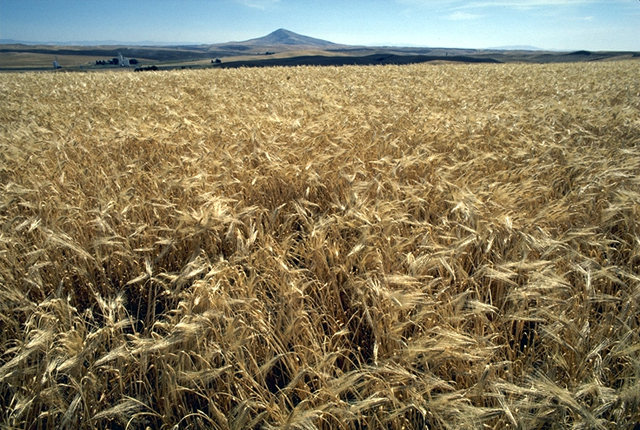
File:Barley.jpg
A glowing, fluffy field of barley with some pretty, swoopy mountains in back.


Before delving more into Japanese culture, I didn't really even think about barley, except for whenever I came across it in the Redwall books, where one of the uses was to make a drink with it. Someone I know tends to associated barley with beef and barley soup.

File:Barley (1).jpg
So these is barley plants then?
Then came the discovery of and research for a post on mugicha (麦茶 as it's written in Japan), which many people outside Japan other than myself seem to have known about for years and years and years. To these people, mugicha is a (Korean, Japanese and Chinese) drink, as well as a coffee and alcohol substitute. In Italy, for example, it's used as an espresso substitute and they call it cafe d'orzo.

Not to mention it's a diet drink, though I don't know where exactly, believed to help get rid of unwanted fat for you. It's also a laxative, but I don't know how popular it is for that feature. But, I hear (at least some of you) ask, warily eying the last sentence, what is mugicha?

To give you an actual definition, mugicha is a (caffeine-free) drink that's made with toasted barley and water (which means it's a tisane). In Japan, it's a thing to drink it in the summer, and ice is perfectly alright to add to it. Why drink it in summer? Its supposed to refresh those bogged down with the heat of summer temperatures. However, it's also a thing in Japan to drink mugicha warmed up in the winter. Sweetened or unsweetened are both acceptable as well, though I'm not sure if that goes for both hot and cold mugicha or just the cold or what.


File:Barley.JPG
Sure looks like pearl barley to me.
As for the taste, let me start with an anecdote that is also blatant post linking: If, like me, you read American Fuji, you may remember the scene where Alex Thorn, one of the main protagonists, is offered some mugicha by his love interest (and other main protagonist), Gabriela Stanton. His reaction? He didn't like it, claiming it tasted like boiled cereal.

He was right -- it tastes like Kashi, the puffed-gain cereal as located in the health food section. And, from my imperfect memory, I think it did sort of have a coffee type roasty-ness too. How do I know this? I made some (for the first time ever) this July. Here's a picture of it:


Want to make your own? There's lots of recipes out there, with lovely pictures on how to make it using pearl barley -- one roasts it via a skillet, no oil or anything, then simmers the result in water. La Fuji Mama's recipe has pictures showing the stages of toasty-ness that the barley goes through while it's in the skillet, as well as other helpful pictures (clicky). ( It was this site I used to make my aforementioned mugicha). La Fuji Mama also says there are several differences between un-hulled barley and pearl barley mugicha -- un-hulled barley mugicha isn't as sweet as the kind made with pearl barley and doesn't exactly have the same flavor.

But while you can make mugicha at home, there are commercial boxes of *huge* bags of it (each bag makes a pitcher), where all one does is put a bag into cold water (that's right -- cold water, a plus in hot weather), and wait for whatever length of time is stated in the box's directions.  These bags use un-hulled roasted barley. If you don't want to spend any time at all making some, there's bottles of pre-brewed mugicha.

Now for a quick little health-scare PSA. There's acrylamide in mugicha (at least, the way the people studying mucha brewed it). This chemical may or may not cause cancer. Boo.

Oh, and one book said it's not barley that's used, it's wheat. And another said barley or rye. Type-o, or a deeper conspiracy? It might be a just type-o, as mugi can be used to mean, among other grains (rye, oats, barley), wheat -- though if you say it without explaining, people think you mean barley.


File:Vegetable beef barley soup.jpg
A pretty rendition of beef and barley soup. Just thought I'd put it here. Enjoy!


References:
Sheesh, this is a long list! (Maybe I should start doing inline citations)

"Keith Michell's Practically Macrobiotic Cookbook"; Keith Michell; 2000

La Fuji Mama: Homemade Mugicha—Japanese Roasted Barley Tea

"Japanese Women Don't Get Old or Fat"; Naomi Moriyama, William Doyle; 2005

"Pretty Good Number One: An American Family Eats Tokyo"; Matthew Amster-Burton; 2013

"A Cook's Journey to Japan: Fish Tales and Rice Paddies 100 Homestyle Recipes from Japanese Kitchens" Sarah Feldner; 2012

"Kyotofu: Uniquely Delicious Japanese Desserts"; Nicole Bermensolo; 2015

"Lonely Planet Japan"; Lonely Planet, Chris Rowthorn, Andrew Bender, Laura Crawford, Trent Holden, Craig McLachlan, Rebecca Milner, Kate Morgan, Benedict Walker, Wendy Yanagihara; 2013

"The Macrobiotic Way: The Complete Macrobiotic Lifestyle Book"; Michio Kushi; 2004

"Five Hundred Fun Facts About Japan"; DIANE Publishing Company, Dorothy Perkins; 1994

"The Sober Kitchen: Recipes and Advice for a Lifetime of Sobriety"; Liz Scott; 2003

"Japanese Food and Cooking"; Stuart Griffin; 2011

"A Dictionary of Japanese Food: Ingredients & Culture"; Richard Hosking; 2014

"Handbook of Bioenergy Crops: A Complete Reference to Species, Development and Applications"; Nasir El Bassam; 2010

"The new beauty: an East-West guide to the natural beauty of body and soul"; 1996

"Berlitz: Japan Pocket Guide"; Berlitz; 2013

"Edible Medicinal And Non-Medicinal Plants: Volume 5, Fruits"; T. K. Lim; 2013

"Teach Yourself Japanese"; Prem Motwani, Noriko Nasukawa, Noriko Nasukawa; 1998


"The Complete Book of Japanese Cooking"; Elisabeth Lambert Ortiz, Mitsuko Endo; 2014

"Chemistry and Safety of Acrylamide in Food"; Mendel Friedman, Don Mottram (editors); 2005

Friday, August 14, 2015

Book Review: American Fuji

Mt. Fuji, courtesty the CIA World Factbook.


When I'm at a library, I sometimes do a search on Japan to see what comes up. Other than a lot of manga, which I'm not really into, there are some history books (though usually not as many as I'd like), culture books in the juvenile section and novels, but mostly ones from the fiction section -- that is, novels that aren't from the young adult or juvenile sections. I tend to have great reservation with novels for grown ups -- even greater, perhaps, than the reservation I have toward young adult books.  But I decided to try American Fuji anyway, and this post is my trying to review it.


P.S. Just so you know,  I read this with an overtired mind, got rather annoyed at it partway through (perhaps in part because I was overtired), and am overtired now, writing this. And, I looked at some spoilers on a review site before I was finished (and in doing so was partly misled for a time)...just a typical, opinionated blog post. :D


P.P. S. (By the way, this is light on spoilers, so you can read it with moderate safety! *salutes*) (Also, I did writing this post quite a while after reading the book).


Plot Overview
Published in 2001, and set in 1990 something, American Fuji's plot has two main problems/mysteries to be resolved. The first is the unexplained death of American psychologist Dr. Alex Thorn's son, Cody, from whom he was estranged.


The second one is actually two. Both involve an amazingly qualified college instructor, expatriate Gabriela (aka Gaby) Stanton (also American). Living, I think, in Shizuoka City (maybe?) , Gaby (can't help but wonder if her name's a pun)'s problems/mysteries are:


a.) she was fired from the Japanese university she was working at -- okay, okay, at which she was working. We have no idea why at first, and neither does she.


b.) Why is she living in Japan at all? She knows the answer, but no one else does.


Alex and Gaby end up meeting through Gaby's current workplace, a sort of funeral home with distinctly unusual funeral options, and they set off together (more or less) to find answers to their lives' most persistent questions. (Sorry, I couldn't resist). 


The Genre
But really, half of the time, the novel does have sort of a murder mystery aspect, if not exactly with a distinct noir or Agatha Christie-ness. There's digging through files, traveling to places and interviewing people, discussing clues, etc. However, that's only half of it. And I mean that in a kind of literal way. The other, fifty-ish percent of the time, it's a satire. Not to mention the fish out of water humor on Alex's part.

The Bad
Was it worth it? Let's start with the bad points. And yes, there are some bad points in this novel.  From the beginning of the story, the author regularly inserts completely unnecessary, very nasty, shall we say "adult", passages -- a general problem I've found in novels classed s "Fic"  -- except they also tend to be dull, too. (More on this in The Good section). These chunks of stupidity tend not to last long, but still. (Also at the introduction of Alex, there's a scene in which a mostly sedated fish is eaten alive. Alex throws up and excuses himself. Yeah... I guess that was a "creepy things to avoid in Japan" cultural moment.)


Another not so great point is that the serious side of the story seems perhaps a bit one dimensional, at least where characters other than Gaby and Alex are concerned. There were some bits I didn't quite follow, and possibly that was just me (see the introduction).

Another thing that later got me down a lot was that most characters, Japanese and non-Japanese alike, are not very nice. For instance, all the Japanese children are mindless brats to foreigners, and Gabriela's associates and neighbors (and one of her co-workers) are invasive and/or nasty and/or selfish and/or strict conformists. (The strict conformism is apparently later explained as being the culture of the area she was living in). There's also an exaggerated opinion of the "American" mindset -- which is discussed in a serious context as if it were totally valid.


And finally, at the very end, the wrap up/coming to terms for Dr. Thorn, though I had been skimming on account of being really over-tired, seemed weak.


All the same,  I feel lenient and wouldn't totally discount American Fuji. In fact, I kinda liked it -- though I did get terribly annoyed, with obsceneness and the exaggerated depiction of people, part way through reading it. But the novel also has some good points.


The Good
For instance, the style wasn't that bad. I did want to keep going out of genuine interest for a while, not just morbid curiosity and the odd, dogged sense of finishing what I start to read that I get sometimes with stupid novels (and later regret). So yeah.


The cultural information bits were interesting too -- some of it I recognized, from reading about Japan on the internet and probably other places, (stuff like Pocari Sweat, Otohime, alcohol from vending machines). And, for a time, I was able to laugh at the satirical half of it. And the descriptions of different places in Japan were also interesting, though I suppose there's always the possibility of artistic license when it comes to that.


And here's something I couldn't help but have an appreciation for: Gaby and Alex do not actually end up, ah, having a night together. They nearly do, but don't -- she wants to wait -- and Alex doesn't have a macho tantrum or get all deeply hurt. That is a rarity in grown up books, in my experience. Some of you might not mind such scenes, but by now you've probably guessed that, I do. So, in a way, another good point for American Fuji, in my assessment. Perhaps the author thought all the nastiness she put in made up for it. I dunno. Anways, let's move on to the conclusion.


Conclusion
All in all, the novel undeniably does have a muck problem, don't want to understate that, and it's use of styles were not as blended as I personally would like, and it's a bit flat, but if you're looking for a comedy/mystery that also is a sort of trip to Japan... you, and I say this tentatively, possibly might want to try it. Just remember you'll have to skip over some stupid stuff every so often, and you probably do not want get too involved in the serious side of it.


Oh, and there's undoubtedly all sorts of symbolism and metaphors concerning human interaction in American Fuji. But I'll leave that up to all y'all's (is that a word?) blog posts.


Ta!


References:
Only the one this time.
"American Fuji"; Sara Backer; 2001